


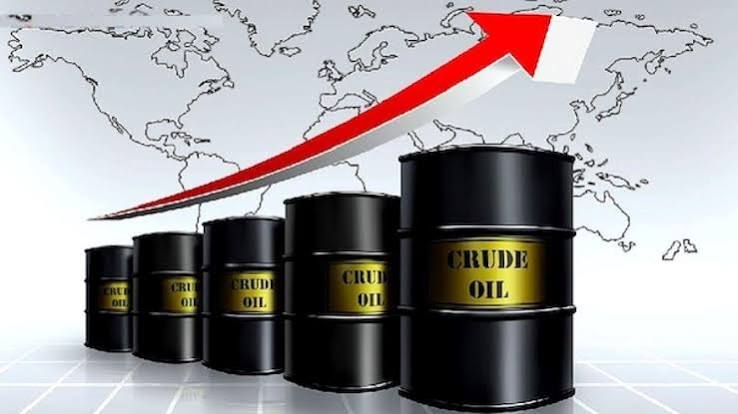
United States has seen decline in its oil with surging supplies from the Gulf. The fall has erased nearly all its gains through the Iranian war, as shipment through the Strait of Hormuz continued to rise and investors increasingly expecting the market to be oversupplied with Persian Gulf exports rebounding sharply.
Brent crude slipped 4.3 percent to settle below $72 a barrel, and West Texas Intermediate dropped 3.7 percent to close near $69 on Friday. WTI was hovering near the lowest levels since late February, when the US and Israel launched the war against Iran.
Global oil markets are flashing signs of a glut in the near term as much of the Middle Eastern supplies that were cut off to the world during the war return to the market. The so-called contango in Brent futures, a signal of oversupply, widened on Friday to the biggest since 2023.
Ships have been openly transiting Hormuz following early progress toward a lasting agreement to end the USIran war, adding millions of barrels to the global market.
As well, Saudi Arabia is beginning to load tankers again at its key Ras Tanura terminal inside the Persian Gulf, a sign of the continued ramp up in output in the region as overall exports are now at about 75 percent of prewar levels, according to Bloomberg calculations.
The bearish supply factors helped erase a Thursday rally that saw prices rise more than two percent after the container ship Ever Lovely was struck by an unknown projectile while sailing southeast of Oman.
Prices remained lower even after US President Donald Trump accused Iran of violating a ceasefire by shooting drones at ships in Hormuz. Meanwhile, the International Maritime Organisation (IMO) said it was looking to restart a program evacuating ships from the Persian Gulf.
“Crude remains under significant pressure as the bearish narrative continues to center on improving flows through the Strait of Hormuz. While transit numbers appear somewhat lower following yesterday’s attack on a vessel, traffic has not stopped entirely,” said senior energy trader at CIBC Private Wealth Group, Rebecca Babin.
The attack on Thursday threatened the fragile confidence of shipowners and crews, but ships continued to transit through the narrow corridor on Friday. Two key exit routes through Hormuz have emerged because the normal one through the middle is thought to have been mined.
One is near Iran, while the other hugs Oman’s coastline and is protected by the US. Iran’s Persian Gulf Strait Authority said Thursday that any transit happening in routes outside its framework would not be protected by “safe-passage guarantees.”
It’s possible that other constraints will persist around the Strait. Oman has told European officials that transiting ships through Hormuz may have to be charged some fees, people familiar said.