


China has rapidly expanded its commercial space industry with strong government backing to narrow the innovation gap with the United States. China is also said to be leading in anti-satellite technologies, including kinetic interceptors, electronic warfare systems and directedenergy weapons.
A new report by the Washington-based Information Technology and Innovation Foundation, published on June 8, warned that Beijing’s accelerating progress could reshape the balance of power in the global space sector. The report cautioned that without swift and decisive action, the US risks losing its leadership position in the space economy.
The warning comes as industry analysts forecast that the global space economy could surpass $1 trillion over the next decade, highlighting the growing strategic and commercial stakes of space competition, with China rising to second place in global space market. A space policy analyst at the Information Technology and Innovation Foundation.
and author of the report, Ellis Scherer said China’s space industry has transformed from a slow-moving sector dominated by stateowned enterprises into a highly competitive and increasingly innovative commercial ecosystem. The report notes that China now ranks second only to the US in the global space market, noting Beijing’s rapid rise as a major force in the commercial and strategic space race.
It also noted that many commercial space technologies now serve both civilian and military purposes, with armed forces increasingly relying on capabilities such as positioning, navigation and timing systems, remote sensing, low Earth orbit broadband networks, and antisatellite weapons.
These technologies play a critical role in modern warfare by enabling surveillance of conflict zones, maintaining communications with troops in remote locations, and tracking the movement of military assets, the South China Morning Post reported. The report also found that the US retains a strong lead in low Earth orbit (LEO) broadband, one of six major space sectors it assessed.
That advantage is largely driven by SpaceX’s Starlink and Amazon’s Project Kuiper, both of which remain ahead of China’s Qianfan and Guowang satellite networks. China’s space ambitions however has continued to face significant challenges, with launch bottlenecks and the lack of operationally proven reusable rockets slowing deployment timelines.
Despite those constraints, Beijing has established a lead in positioning, navigation and timing services, driven largely by the global expansion of China’s BeiDou Navigation Satellite System, the report added. Furthermore, the scale of China’s satellite constellation, expanding global coverage and rising international adoption have pushed Beijing ahead of Washington in navigation services.
It also ranked China as the leader in remote sensing and satellite imaging, citing governmentbacked programs such as the Gaofen satellites and commercial constellations like Jilin-1, which have helped build one of the world’s largest satellite imaging ecosystems.
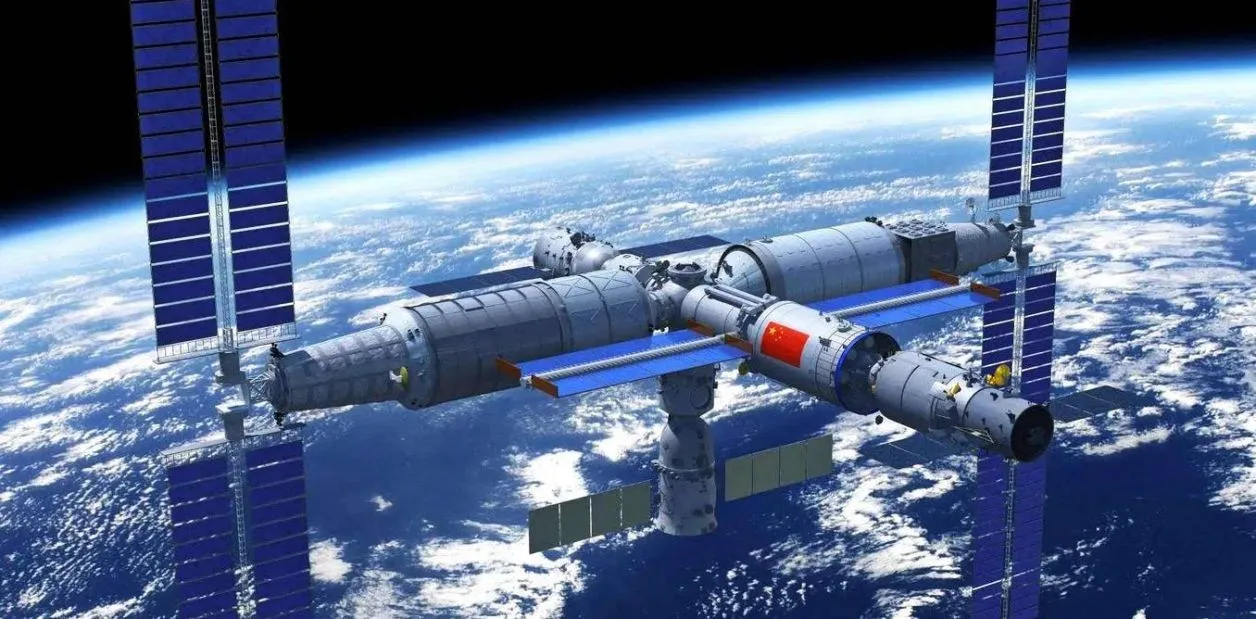
The gap is much narrower in space station capabilities though, and while the US benefits from decades of operational experience with the International Space Station, China has rapidly advanced its Tiangong Space Station, bringing the two nations to broadly comparable levels despite following different development models.
The report also found China leading in counterspace capabilities, citing sustained investment in antisatellite technologies, including kinetic interceptors, electronic warfare systems and directed-energy weapons designed to disrupt or disable satellites.