



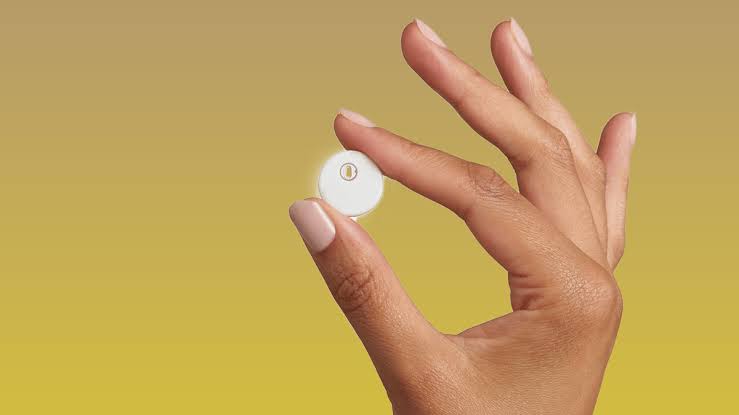
Endocrinologists are now asking critical questions about ketone monitoring as Abbott Laboratories prepares to launch its first dual-analyte sensor.
After receiving Europe’s CE mark earlier this year, Abbott announced it preparation to launch the Glucose-ketone Sensors, advanced wearable or handheld medical tools that measure both blood sugar (glucose) and fat breakdown products (ketones) at the same time, bringing the device to the US.
The CE mark is a mandatory symbol placed on products to show they met European Union health, safety, and environmental protection rules.
Abbott has filed an application for its new device, called Libre Duo, with the US Food and Drug Administration (FDA) with expectations for approval before the end of the year.
The company hopes that by allowing people to be more aware of ketone levels, the new device would help prevent diabetic ketoacidosis, or DKA, a serious complication of diabetes where the body lacks insulin.
However, broader access to ketone measurement also brings questions around best practices for interpreting and acting on this new data.
As Abbott gets ready to roll out the system to certain countries in Europe this year, and later in the US, endocrinologists and diabetes groups are preparing guidelines to educate patients and physicians about how to best use continuous ketone monitoring.
Five questions as Abbott prepares to debut its multi-analyte sensors, as outlined by MedTech Dive: 1. Who will be able to use continuous glucoseketone monitors?
In Europe, Abbott will offer a 15-day version of Libre Duo for adults, and a 10-day version for people ages two and older. The system is intended for people with Type 1 or Type 2 diabetes who are at higher risk for DKA, including people who take insulin or other glucose-lowering medications.
In the US, the FDA has yet to determine who will be able to use the device.
Senior medical director of Abbott Diabetes Care and a pediatric endocrinologist, Alisa Schiffman said she hopes to get a label that will allow Libre Duo to be used by people with diabetes who are at risk for DKA.
“We know that DKA is the most common hyperglycemic emergency for people living with diabetes,” Schiffman said, adding that Abbott sees an opportunity to prevent hospital admissions from DKA by allowing people to take action earlier.
- How helpful is a continuous ketone measurement?
Currently, many people with diabetes don’t regularly test ketones or have the equipment to do so on hand, physicians told MedTech Dive.
“People don’t think about measuring their ketones,” said Jennifer Sherr, medical director of pediatric diabetes at Yale University School of Medicine. “It’s a missed opportunity.”
Right now, there are two main ways to measure ketones. Urine-based ketone tests are the most common, but the results lag what is actually happening in a person’s body. Blood ketone tests are more convenient, but insurance coverage is “pretty limited,” said Brynn Marks, senior director of medical affairs for diabetes nonprofit Breakthrough T1D.
If a person has a high blood glucose reading, a ketone measurement could help them narrow down whether that was because of a meal or a bigger concern, such as an insulin pump set failure, where the tubing can get blocked or come out of place, Marks said.
Infusion set failures are “a huge problem,” said Rayhan Lal, an assistant professor and endocrinologist at Stanford Health Care. However, Lal doesn’t see a ketone sensor as the answer to this problem.
It would be more helpful to measure insulin directly than using ketones as a surrogate, Lal said. But the way most glucose sensors are designed today, ketones are easier to add as a feature.
“This is exactly why lactate and ketones get picked up on, because those are easier analytes than say, detecting insulin, which is hard but useful,” Lal said.
Ketones are a byproduct of fat metabolism, but the measurement is “highly nonspecific,” meaning it’s hard to know if high ketones are caused by insulin deficiency.
“It’s not the ketones; it’s the insulin deficient state, which is really what we need to understand for set failure,” Lal said.
- How do you keep from overwhelming users with data?
A challenge with continuous glucose monitors is the volume of data they provide to users, said Breakthrough T1D’s Marks. As companies consider adding ketone monitoring to the mix, work is being done to understand what information is important for users.
“We want to make sure that these devices are well received by the community and they provide actionable alerts that something needs to be done,” Marks said.
While Abbott hasn’t shared the specifics of what its Libre Duo system will look like, Schiffman said the company is thinking of glucose as the “mainstay” and ketones as being there when needed. She compared glucose to the speedometer of a car, something the driver is always checking, while ketones are more like the check engine light. The goal is to provide users an alert that something is going on that they may need to watch.
A pharmacist and director of Education and Training in Diabetes Technology for Cleveland Clinic, Diana Isaacs said ketones don’t change as quickly as glucose. Checking ketone levels every five minutes would be “overkill,” Isaacs said. Even if the value were only updated every few hours, it would be helpful instead of having to get a lab stick.
- How will users be educated, and what guidelines do doctors have on managing high ketone readings?
Ultimately, it’s up to the person and their doctor to decide how to act based on a ketone reading, Abbott’s Schiffman said.
“Every healthcare provider, every health system does things a little bit differently,” she added.
Diabetes experts have spearheaded recent efforts to set broader standards around ketone monitoring. Breakthrough T1D led an international consensus recommendation that was published in the Lancet in January. The group determined what ketone concentrations constitute normal, elevated and high levels, setting a threshold of 3 mmol/L as “urgent high.” However, the group acknowledged that there was low evidence for using this as a diagnostic threshold for DKA.
Individualised thresholds might work better for different people based on their age, medications and foods, Breakthrough T1D’s Marks said. Having trend arrows, as is done with glucose, can also be helpful to know if ketone levels are rising or falling, since they can take a while to change.
If a person’s ketone levels are elevated, they can assess if they missed a dose, if an illness might be causing them to eat less, or if there’s an issue with the tubing for their automated insulin delivery system, Marks said. They can take a dose of longacting insulin and monitor to see if ketone levels are dropping.