


Scientists better predict how thawing permafrost, or ground that is frozen for an extended length of time, could affect Earth’s climate. How frozen soil stalls The zero curtain works much like a glass of ice water. The water remains at the freezing point because incoming heat melts the ice rather than raising the temperature. The same effect occurs within Arctic soil during spring. In autumn, the reverse happens: As water freezes, it releases heat that holds the ground near the freezing point before it can cool further.
The near-freezing conditions allow microbes in the soil to remain active longer, releasing carbon Going solar in Britain may soon no longer mean putting panels on roof, as plug-in solar kits will become legal in the country from August 27, giving households another option to generate some of their own electricity without committing to a full rooftop installation.
A British solar energy company, UKSOL, says it is the first among such firms to have plug-in products listed as compliant in the Energy Networks Association’s Connect Direct database.
The company disclosed that its first two kits are due to go on sale from August 27, initially in limited quantities.
The Plug-In Solar Pro Compact 460W Ground Mount Kit uses one solar panel while the Pro Duo 890W Ground Mount Kit comes with two.
The single-panel kit is priced at £849 including VAT and two-person delivery, while the twopanel version costs £1,199. The recommended retail prices are £699 and £1,089 respectively.
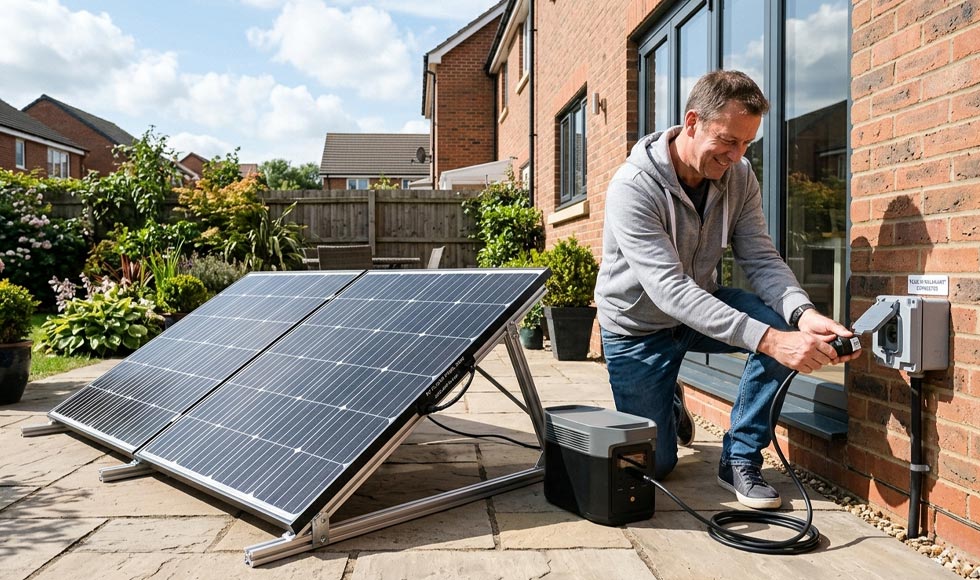
Unlike traditional solar installations, these systems are designed to be much smaller and can be placed on the ground in a garden or another suitable outdoor space.
That could make the technology interesting for people who have been priced out of traditional solar or simply cannot install panels on their homes.
A flat may not have a suitable private roof, while renters may not want to invest in a permanent installation on a property they do not own. Some houses also have roofs that are unsuitable for solar panels.
The UKSOL kits come with a foldable ground-mounting frame, a ballast tray to keep the panels stable, an 800W microinverter and the cables needed to connect the system. Users can also monitor the system through a smartphone app.
The company is also preparing hybrid versions that can be mounted on the ground, a wall or a balcony. A 515W single-panel model and a 920W two-panel version are expected in October, although pricing has not yet been announced.
Other retailers and manufacturers are expected to enter the market as the new rules take effect, potentially giving consumers more choice.
The attraction is partly the lower commitment. Experts have estimated that plug-in solar systems could have a three-to-five-year payback period, depending on the system, household electricity use and energy prices.
But the panels are not something that can simply be placed anywhere and plugged in.
There are restrictions around installation, including rules affecting wooden balconies and fences because of safety concerns. Consumers will also need to check that the equipment they buy meets the relevant UK requirements.
UKSOL chief executive Andrew Moore reportedly said consumers should pay attention not only to price but also to who manufactured the system, what testing it has undergone, its warranty and the technical support available.
That could become increasingly important as more plug-in products enter the market.
The new category is not designed to replace a full rooftop solar system. A couple of panels will produce considerably less electricity than a larger installation covering a suitable roof.
For someone living in a flat, renting a house or unable to install traditional solar, a smaller system that can sit outside could offer a way into solar power that was previously difficult or too expensive.