



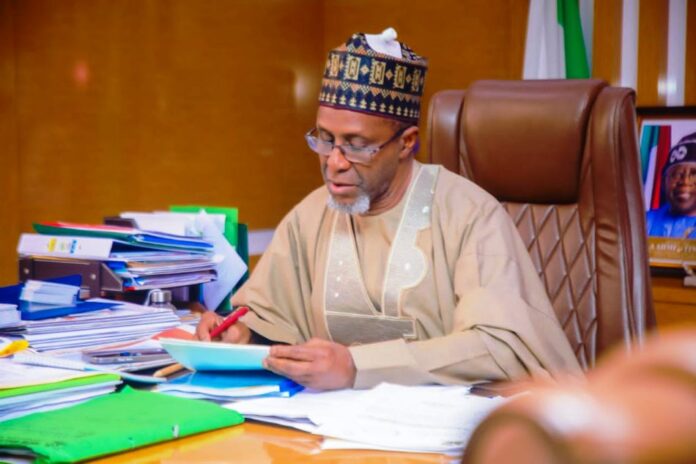
Federal Government has validated an updated national policy to address desertification, land degradation and drought. According to News Agency of Nigeria (NAN), the policy was validated early last week at a workshop on the ‘review of the national policy on desertification, land degradation and drought’ in Abuja. Minister of Environment, Balarabe Lawal, said the updated document would strengthen efforts to tackle environmental degradation and promote sustainability across the country.
Represented by permanent secretary of the ministry, Mahmud Kambari, Lawal said the validation marked a critical stage in the policy review process, providing an opportunity for stakeholders to assess its objectives, strategies and implementation mechanisms. “This occasion represents a vital milestone in our efforts to address Desertification, Land Degradation, and Drought in Nigeria.
“Drought and Desertification are not abstract environmental concepts. This validation workshop provides a platform for stakeholders to carefully examine the revised policy document, assess its objectives, strategies, and implementation mechanisms, and ensure that it reflects a shared national vision,” the minister said. He added that the review was not merely for endorsement but to ensure collective ownership of the policy, identify gaps and refine approaches to make the document practical, inclusive and results-oriented.
According to him, desertification and drought threaten agricultural productivity, water availability, food security, biodiversity and socioeconomic stability, with severe impacts on farming and pastoral communities. Lawal expressed optimism that the policy would serve as a foundation for integrated and long-term solutions.
“The draft National Drought and Desertification Policy document before us today is the outcome of the review of the existing policy which commenced on July 2, 2025 with the inception workshop which brought stakeholders from the 36 states of the federation including the FCT “Government would provide the leadership needed for its full implementation but it must be complemented by strong partnerships with the private sector, civil society, research institutions, and local communities,” the minister added.
Also speaking, Kambari, represented by the director of Desertification, Land Degradation and Drought Management, Regina Nwaneri, said the existing policy framework had become outdated and needed to respond to emerging risks and evolving national and international commitments.