


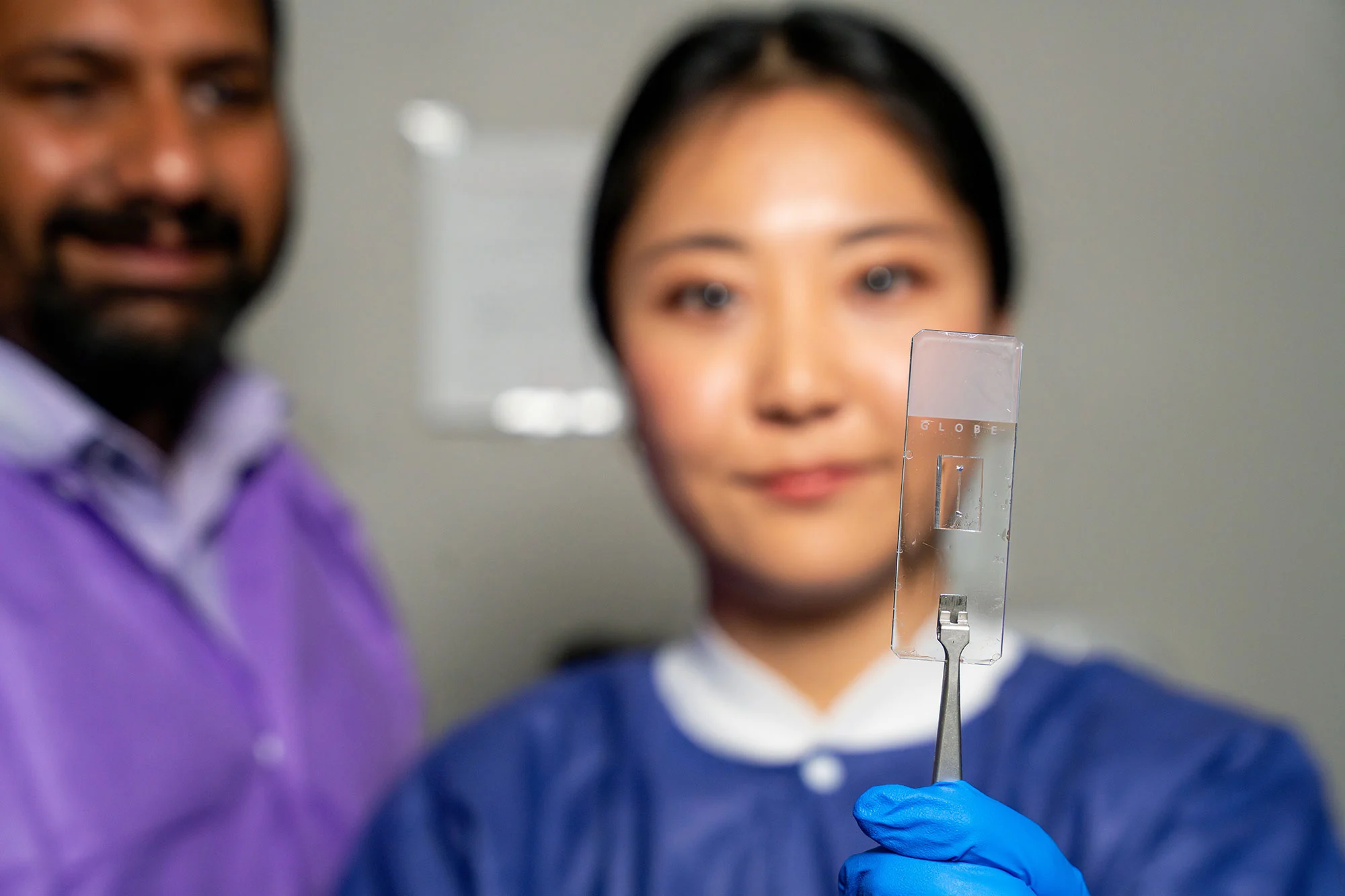
Researchers have developed a new platform that can replicate different types of blood vessel structures to treat vascular disease. The researchers from the Department of Biomedical Engineering at Texas A&M University, are adopting a customisable vessel-chip method to tackle the disease. The goal is to recreate the kinds of shapes that matter in disease, with experiments on blood flow and potential treatments reflecting what happens in the body more closely and can better support drug discovery.
Vessel-chips are engineered microfluidic devices that mimic human vasculature on a microscopic scale. Instead of studying blood flow in animals or oversimplified lab setups, the scientists can use these chips to examine how fluid forces move through vessel-like structures in a controlled environment.
Because the design can be tailored, the platform can also support patient-focused studies, which is useful when small differences in anatomy may affect how disease develops or how a therapy performs. A biomedical engineering master’s student, Jennifer Lee teamed up with Dr. Abhishek Jain’s lab and designed an advanced vessel-chip that could reproduce real variations in vascular structure.
That matters because vessel geometry can reshape the physical forces acting on the vessel wall. Those forces, including shear stress, influence how cells lining blood vessels respond that can contribute to the conditions in which damage begins or disease progresses. “There are branched vessels, or aneurysms that have sudden expansion, and then stenosis that restricts the vessel.
All these different types of vessels cause the blood flow pattern to be significantly changed, and the inside of the blood vessel is affected by the level of shear stress caused by these flow patterns. That’s what we wanted to model,” Lee said. Lee’s research, published in Lab on a Chip, followed earlier work from her mentor, Dr. Tanmay Mathur, a former biomedical engineering graduate student who previously created a straight vessel-chip.
Lee and Mathur conducted their studies in the Bioinspired Translational Microsystems Laboratory under Jain, an associate professor and Barbara and Ralph Cox ’53 faculty fellow in the biomedical engineering department.