


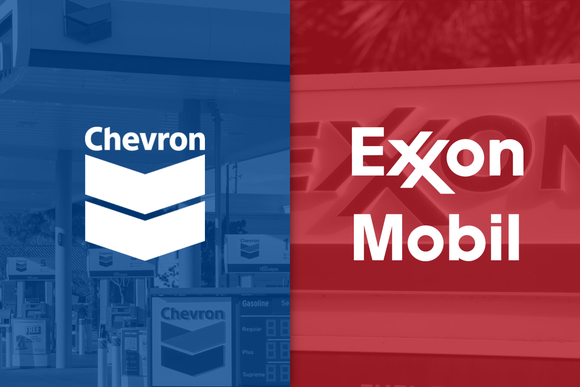
Two US biggest oil giants, ExxonMobil Holdings Corp. and Chevron Corp. more than doubled their net profits in the second quarter of 2026 to strike debt reduction rather than huge buyback increases.
This signals the Big Oil’s strategic move in what industry analysts believe is adoption of caution on how long war-driven price spikes will last.
The oil conglomerates’ significant rise in net income in Q2 came on the heels of global energy market disruptions occasioned by conflicts in the Persian Gulf and Russia.
However, in a pivot from previous oil-sector heydays, the supermajors refrained from lavishing the proceeds on investors.
According to Bloomberg, ExxonMobil lowered net debt by more than $7 billion during the quarter, the equivalent of almost half the company’s adjusted net income for the period.
For its part, Chevron steered a record $8.4 billion into debt reduction, slashing its ratio of net debt to cash flow from operations by more than half, the company said in a statement on Friday.
The American oil majors’ European rivals, Shell Plc and TotalEnergies SA, also held the line on shareholder rewards in recent days and instead trained its massive windfall profit on whittling debt.
Shell cut net debt by about $10.8 billion, crimping its ratio of net to equity to just under 19 percent from more than 23 percent in the prior quarter. The company held buybacks even at $3 billion. TotalEnergies’ gearing fell close to 13 percent, excluding leases, from almost 16 percent.
The largest crude-supply disruption in history is proving highly profitable for the supermajors as customers scramble to replace flows trapped behind the Strait of Hormuz, a gateway for 20 percent of the world’s petroleum. Crude has dropped since spiking to more than $125 a barrel in April due to on-off talks between the US and Iran, but refining margins are still near record levels, meaning some of the excess profits will likely endure into the second half of the year.
During a call with analysts, ExxonMobil chief executive officer, Darren Woods said he was confident that the strait would eventually reopen — but that he couldn’t predict when.
“We’re convinced that it will come to be at some point in the future. It’s too critical to the overall health of world economy and for people’s standard of living,” Woods said.
ExxonMobil narrowly missed profit forecasts despite soaring crude prices and widening fuel-making margins as the US-Iran conflict enters its sixth month. The stock was down 2.5 percent at 10:35am in New York.
Adjusted second-quarter earnings of $3.52 a share were 2 cents below the average estimate in a Bloomberg survey. Exxon’s miss was due in part to refinery maintenance that meant it wasn’t able to fully capture high prices for gasoline, diesel and jet fuel.
That said, overall profit of $14.7 billion was the largest since Russia’s 2022 invasion of Ukraine that upended global markets.
Chevron, for its part, reaped its highest quarterly profit on record, surpassing the prior all-time highs achieved in 2022. The stock rose as much as 1.8 percent.
The explorer lifted production by 20 percent to the equivalent of 4.07 million barrels a day. Assets in the US Gulf of Mexico and Kazakhstan ramped up output during the quarter while the company also benefited from the integration of Hess Corp. assets acquired in last year’s $55 billion takeover. The company’s US production reached a record high.