

• About
  • Advertise
  • Privacy & Policy
  • Contact
Research Television
Advertisement
  • Home
  • Research News
    • World
    • Africa
    • Europe
    • Asia
    • Pacific
    • Oceanic
    • Politics
  • Research Business
    • Agriculture
    • Energy
    • Manufacturing
    • Services
    • Tech
  • Research Style
    • Community
    • Culture
  • Research Entertainment
    • Movies
    • Music
  • Research Technology
    • Innovation
    • Science
  • Research Education
  • Research Environment
  • Research Health
  • Research Security
  • Research Sports
    • Football
    • Basketball
    • Golf
    • Tennis
  • Research Religion
  • LIVE
No Result
View All Result
  • Home
  • Research News
    • World
    • Africa
    • Europe
    • Asia
    • Pacific
    • Oceanic
    • Politics
  • Research Business
    • Agriculture
    • Energy
    • Manufacturing
    • Services
    • Tech
  • Research Style
    • Community
    • Culture
  • Research Entertainment
    • Movies
    • Music
  • Research Technology
    • Innovation
    • Science
  • Research Education
  • Research Environment
  • Research Health
  • Research Security
  • Research Sports
    • Football
    • Basketball
    • Golf
    • Tennis
  • Research Religion
  • LIVE
No Result
View All Result
Research Television
No Result
View All Result
Home Research Technology Innovation

New 3D ‘invisibility’ cloak hides objects from infrared cameras

ResTV by ResTV
July 17, 2026
in Innovation
0
New 3D ‘invisibility’ cloak hides objects from infrared cameras
0
SHARES
0
VIEWS
Share on FacebookShare on Twitter

Researchers have developed the first 3D, omnidirectional thermal “cloak” capable of making objects invisible to infrared cameras from any direction. 

Compared with previous designs that only worked in two dimensions or at a single angle, this new device guides heat around an object rather than just blocking it, making it “appear as if nothing is there.” 

The innovative work, published in the journal, Nature Communications, was an international effort developed in partnership with the Technical University of Denmark (DTU). “A real thermal cloak should work no matter where the heat comes from. 

Our device can hide a complex 3D object in an infinite number of directions while keeping the temperature inside stable and protected,” said Shelly Zhang, Civil and Environmental Engineering professor at the University of Illinois Urbana-Champaign. 

Typically, objects like soldiers, drones, or overheating microchips emit a distinct thermal signature that makes them easily detectable in the dark. However, this innovative material completely erases thermal signatures from infrared screens by altering how heat is emitted and detected. 

To solve a problem that has stumped materials scientists for years, the team went back to the foundational math of heat transfer. Standard, off-the-shelf materials were insufficient, demanding an entirely new structure for the cloak. 

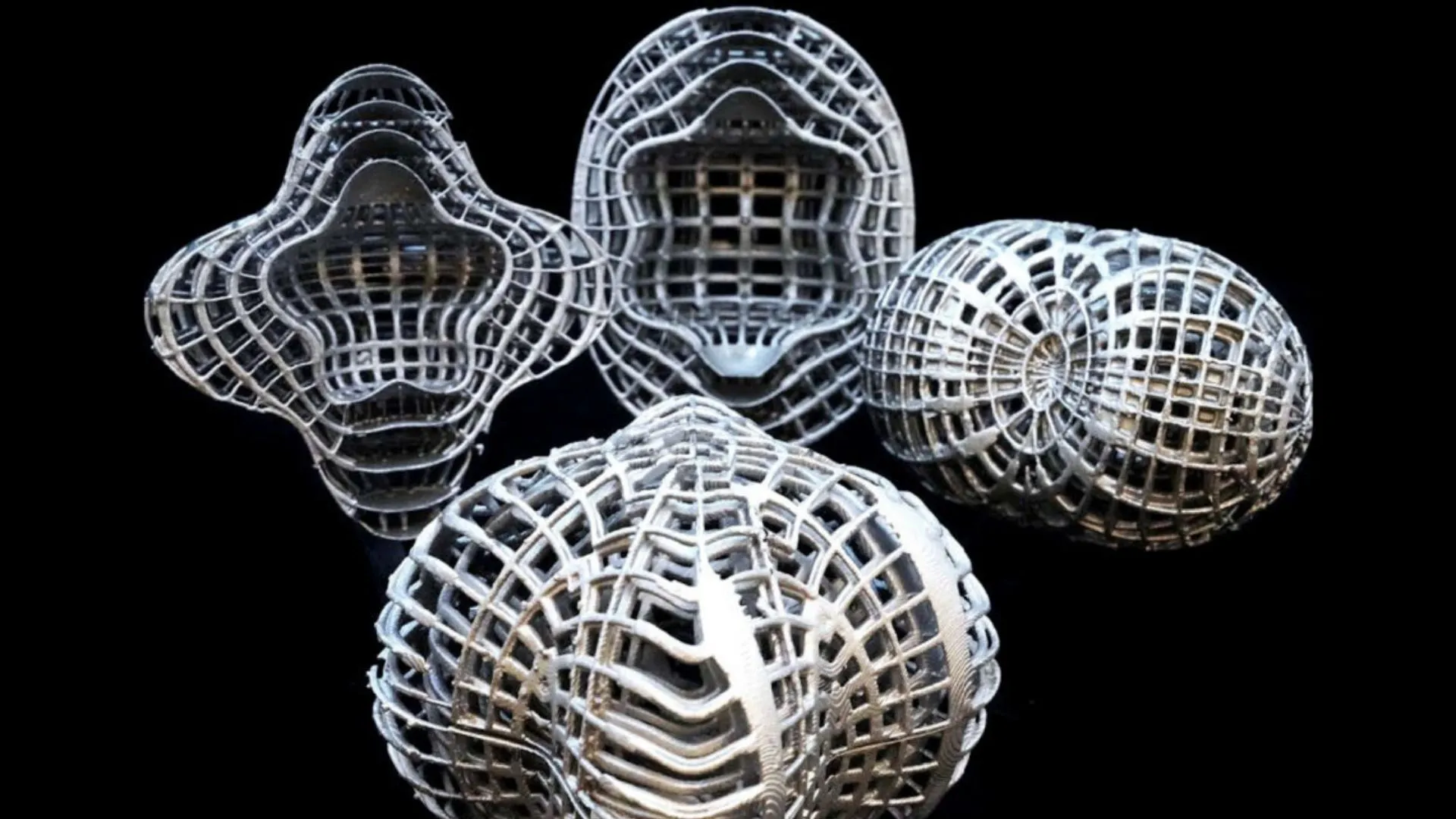
The result is a complex 3D-printed lattice framework that resembles a high-tech honeycomb. Physically fabricated and successfully tested, this hybrid device features a 3D-printed aluminum lattice for high thermal conductivity, filled via mold casting with a low conductivity, rubber-like material. 

Three-dimensional adjustments of the lattice dimensions enabled precise tuning of localised thermal conductivity. When warmth hits the cloak, it doesn’t push through to the object inside. 

It glides around the outer shell like water parting around a smooth stone in a river, smoothly stitching back together on the other side. 

To an infrared camera looking at the setup, the thermal landscape appears entirely undisturbed. The object disappears from sight. 

Older technologies failed if the environment shifted or the viewing angle changed, but this innovation maintains its illusion across complex surfaces and dynamic environments. 

In the testing, the material was put into extreme temperature gradients, and an infrared camera was used to track heat flow. 

To an outside observer, the temperature field appeared completely normal as if the hidden object wasn’t there at all. While the interior of the cloaked region remained at a safe, uniform temperature, protected from external extremes. 

To push the envelope, the researchers even successfully cloaked highly irregular geometries, including a detailed 3D model of a human head. 

ResTV

ResTV

Stay Connected test

  • 23.9k Followers
  • 99 Subscribers
  • Trending
  • Comments
  • Latest
7 Key Things to Know About the Nile University EMBA Program

7 Key Things to Know About the Nile University EMBA Program

May 30, 2025
yamal

Yamal Shines as Barcelona Clinch La Liga Title and Complete Domestic Treble

May 30, 2025
trump in doha

Trump Lifts Sanctions on Syria Following Historic Meeting with President al-Sharaa

May 30, 2025
President Tinubu to Attend Pope Leo XIV’s Inauguration in Rome

President Tinubu to Attend Pope Leo XIV’s Inauguration in Rome

May 30, 2025
Dangote, Trump Exchange Pleasantries During High-Profile Visit To Qatar

Dangote, Trump Exchange Pleasantries During High-Profile Visit To Qatar

1
wimmer mike

Teenage Prodigy Mike Wimmer Unveils his Invention at Graduation

0
solar probe

Parker Solar Probe Brings Humanity Closer Than Ever to the Sun

0
JD Vance

VP Vance: Ukraine War Far From Over, US Role Now About ‘Finding Middle Ground’

0
France to arm Ukraine with 16 Rafale jets and missile licenses

France to arm Ukraine with 16 Rafale jets and missile licenses

July 17, 2026
Scientists invent painted e-tattoos that could turn to monitoring electrocode

Scientists invent painted e-tattoos that could turn to monitoring electrocode

July 17, 2026
New 3D ‘invisibility’ cloak hides objects from infrared cameras

New 3D ‘invisibility’ cloak hides objects from infrared cameras

July 17, 2026
Nigeria’s Nearpays emerges first African startup to win UN’s AI for Good Innovation Factory

Nigeria’s Nearpays emerges first African startup to win UN’s AI for Good Innovation Factory

July 17, 2026

Recent News

France to arm Ukraine with 16 Rafale jets and missile licenses

France to arm Ukraine with 16 Rafale jets and missile licenses

July 17, 2026
Scientists invent painted e-tattoos that could turn to monitoring electrocode

Scientists invent painted e-tattoos that could turn to monitoring electrocode

July 17, 2026
New 3D ‘invisibility’ cloak hides objects from infrared cameras

New 3D ‘invisibility’ cloak hides objects from infrared cameras

July 17, 2026
Nigeria’s Nearpays emerges first African startup to win UN’s AI for Good Innovation Factory

Nigeria’s Nearpays emerges first African startup to win UN’s AI for Good Innovation Factory

July 17, 2026
Research Television

Research is in everything and everything is in research

Follow Us

Centre for Petroleum, Pollution and Corrosion Control

African Journal of Engineering and Environmental Research

Research Newspaper

Browse by Category

  • Africa
  • Agriculture
  • Asia
  • Basketball
  • Community
  • Culture
  • Energy
  • Europe
  • Football
  • Golf
  • Innovation
  • Manufacturing
  • Movies
  • Pacific
  • Politics
  • Research Automobile
  • Research Business
  • Research Education
  • Research Entertainment
  • Research Environment
  • Research Health
  • Research News
  • Research Religion
  • Research Security
  • Research Sports
  • Research Style
  • Research Technology
  • Science
  • Services
  • Tech
  • Uncategorized
  • World

Recent News

France to arm Ukraine with 16 Rafale jets and missile licenses

France to arm Ukraine with 16 Rafale jets and missile licenses

July 17, 2026
Scientists invent painted e-tattoos that could turn to monitoring electrocode

Scientists invent painted e-tattoos that could turn to monitoring electrocode

July 17, 2026
  • About
  • Advertise
  • Privacy & Policy
  • Contact

© 2026 Research Television.

No Result
View All Result

© 2026 Research Television.