


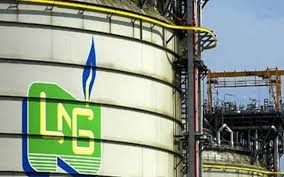
Chief executive officer of Nigeria Liquefied Natural Gas Limited (NLNG), Adeleye Falade has raised the alarm that the country’s position in the global liquefied natural gas (LNG) market is under threat following the decline of its share from six percent to five percent.
Falade, who spoke during a recent NLNG Facts & Figures presentation in Lagos, said Nigeria’s share of the global LNG market could decline further to as low as 2 percent unless urgent action is taken to address feedstock supply challenges and expand processing capacity.
Falade attributed the decline to Nigeria’s slow capacity growth compared to global competitors that are moving faster to monetise their gas reserves.
“About three to four years ago, NLNG held six per cent of global LNG market share. Eventually, we’re down to five per cent. There are other countries that are growing,” he said.
The NLNG boss linked the risk to Nigeria’s failure to scale up LNG processing despite its vast gas reserves.
Comparing Nigeria with other countries in the global LNG market, Falade said Australia has a proven gas reserves of about 120 trillion cubic feet (TCF) and a processing capacity of about 88 million tonnes per annum (MTPA).
He said Malaysia, with just 97 TCF of gas reserves, has a processing capacity that exceeds Nigeria’s.
“But then you look at us (Nigeria) 209 TCF and just 22 MTPA. So at that point in time, it became obvious to us that we needed to be more ambitious about our growth,” Falade said.
He said the global shift away from dirtier energy sources has created a limited window for gas-producing countries to maximise the value of their reserves.
“While the world has moved away from sources of energy that are very dirty… gas will still be dominant in the energy mix, not just for today, not just in 10, 20, 30, up to the next 40, 50 years. But we can’t assume that window will be open for a long period of time,” Falade said.
He said gas applications extend beyond power generation to fertilisers, petrochemicals, cosmetics, and transportation, including compressed natural gas (CNG) buses.
“What all of that is doing is allowing us to be able to maximise that potential that God has given us as a country,” Falade said.
The CEO warned that unless Nigeria acts quickly, other countries will continue to capture the market share it is losing.