

• About
  • Advertise
  • Privacy & Policy
  • Contact
Research Television
Advertisement
  • Home
  • Research News
    • World
    • Africa
    • Europe
    • Asia
    • Pacific
    • Oceanic
    • Politics
  • Research Business
    • Agriculture
    • Energy
    • Manufacturing
    • Services
    • Tech
  • Research Style
    • Community
    • Culture
  • Research Entertainment
    • Movies
    • Music
  • Research Technology
    • Innovation
    • Science
  • Research Education
  • Research Environment
  • Research Health
  • Research Security
  • Research Sports
    • Football
    • Basketball
    • Golf
    • Tennis
  • LIVE
No Result
View All Result
  • Home
  • Research News
    • World
    • Africa
    • Europe
    • Asia
    • Pacific
    • Oceanic
    • Politics
  • Research Business
    • Agriculture
    • Energy
    • Manufacturing
    • Services
    • Tech
  • Research Style
    • Community
    • Culture
  • Research Entertainment
    • Movies
    • Music
  • Research Technology
    • Innovation
    • Science
  • Research Education
  • Research Environment
  • Research Health
  • Research Security
  • Research Sports
    • Football
    • Basketball
    • Golf
    • Tennis
  • LIVE
No Result
View All Result
Research Television
No Result
View All Result
Home Research Technology Science

Scientists use laser whisk to create advanced alloys for jets, nuclear reactors

ResTV by ResTV
June 8, 2026
in Science
0
Scientists use laser whisk to create advanced alloys for jets, nuclear reactors
0
SHARES
0
VIEWS
Share on FacebookShare on Twitter

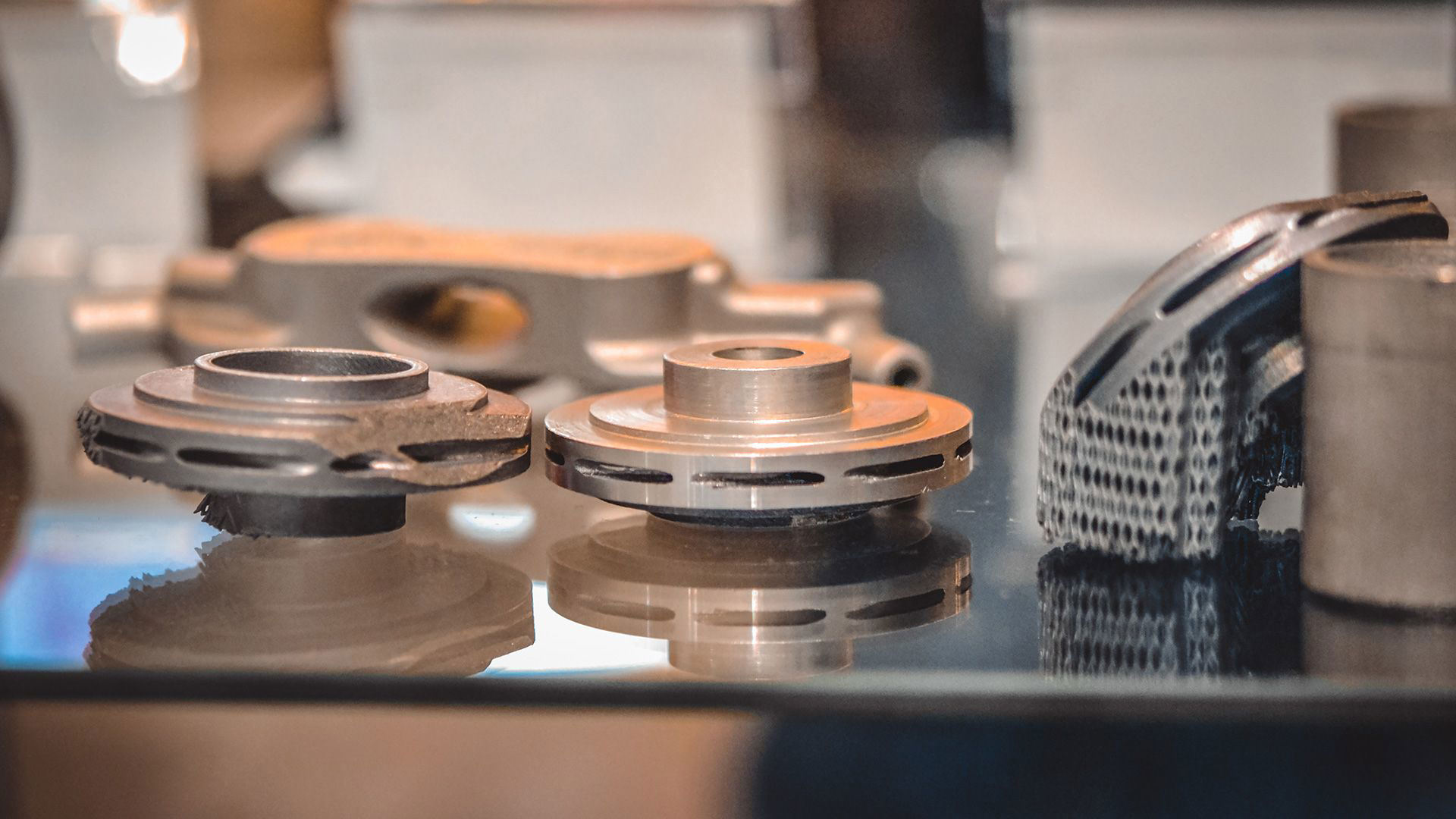
Researchers at the United States National Institute of Standards and Technology (NIST) have created a new laser-based method that could simplify the manufacturing of some of the world’s toughest metal alloys.

The scientists uses a specially programmed laser to stir molten metals during 3D printing, helping the different elements blend more evenly at the atomic level.

This advance could help produce high-performance materials for jet engines, nuclear reactors, and other equipment that must work in extreme conditions. Why high-entropy alloys are difficult to manufacture Many modern industries depend on metal alloys that offer unique properties such as heat resistance, strength, and corrosion resistance.

Most traditional alloys are made from a single main metal combined with small amounts of other elements. Steel, for instance, is mostly iron with a small amount of carbon and other additives. High-entropy alloys (HEAs) differ because they contain multiple metals in roughly equal amounts, rather than a single main metal. A typical HEA might contain five metals, each accounting for about 20 percent of the total.

These unique mixtures can perform very well at high temperatures, making them appealing for aerospace and energy applications. However, making them is not easy. “HEAs need to be mixed down to the atomic level.

It takes extra effort to get metals to blend together in those ratios,” said Fan Zhang, the NIST physicist who co-led the project. Different metals melt, flow, and cool differently. When the molten material solidifies, the elements often separate into different areas, which lowers the quality and strength of the alloy.

“It’s difficult to make HEA parts with traditional methods like casting. But we believe metal 3D printing could be a solution,” said Zhang. T he team worked with laser powder bed fusion, a common type of metal 3D printing.

In this method, a laser melts fine metal powder one layer at a time to build a solid object. Usually, the laser moves in straight lines across the powder bed. NIST researcher, Ho Yeung and his team tried something new. They programmed the laser to move in loops, which stirred the small pool of molten metal as it formed.

This idea is similar to mixing ingredients in a bowl. By moving the liquid metal, the researchers helped the elements blend rather than separate.


ResTV

ResTV

Research Television

Research is in everything and everything is in research

Follow Us

Centre for Petroleum, Pollution and Corrosion Control

African Journal of Engineering and Environmental Research

Research Newspaper

Browse by Category

  • Africa
  • Agriculture
  • Asia
  • Basketball
  • Community
  • Culture
  • Energy
  • Europe
  • Football
  • Golf
  • Innovation
  • Manufacturing
  • Movies
  • Pacific
  • Politics
  • Research Automobile
  • Research Business
  • Research Education
  • Research Entertainment
  • Research Environment
  • Research Health
  • Research News
  • Research Religion
  • Research Security
  • Research Sports
  • Research Style
  • Research Technology
  • Science
  • Services
  • Tech
  • Uncategorized
  • World

Recent News

As OPEC+ meets, Iran war still impedes change in oil market – Report

As OPEC+ meets, Iran war still impedes change in oil market – Report

June 8, 2026
Algeria commences construction on $13bn Trans-Saharan gas pipeline

Algeria commences construction on $13bn Trans-Saharan gas pipeline

June 8, 2026
  • About
  • Advertise
  • Privacy & Policy
  • Contact

© 2026 Research Television.

No Result
View All Result

© 2026 Research Television.